




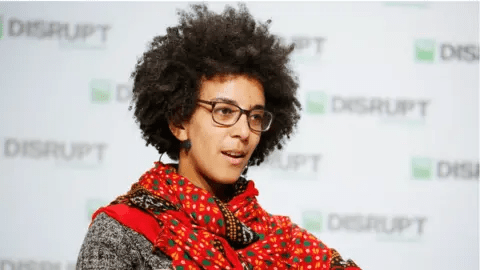
The Firing That Shook the AI World
In December 2020, Google made a decision that would send shockwaves through the tech industry: it forced out Dr. Timnit Gebru, a leading AI ethics researcher, after she co-authored a paper criticizing the dangers of large language models.
Her abrupt termination sparked global outrage, employee walkouts, and a fierce debate about corporate censorship, AI bias, and who really controls the future of artificial intelligence.
This is not just a story about one researcher’s firing—it’s about the systemic suppression of ethical concerns in Big Tech, the hidden biases in AI, and why the fight for responsible technology is more urgent than ever.
Who Is Timnit Gebru? The Ethical AI Pioneer
Born in Ethiopia and later moving to the U.S., Timnit Gebru earned her PhD at Stanford under AI luminary Fei-Fei Li. Her groundbreaking research exposed:
- Racial and gender bias in facial recognition (shocking error rates for Black women)
- The environmental cost of AI (massive carbon footprints from training models)
- The dangers of unregulated large language models (misinformation, discrimination, and corporate control)
Before her firing, she co-led Google’s Ethical AI team—until her research clashed with corporate interests.
Why Google Fired Timnit Gebru: The Paper That Exposed AI’s Dark Side
In 2020, Gebru co-authored a research paper titled “On the Dangers of Stochastic Parrots: Can Language Models Be Too Big?” The paper warned:
✅ Bias in AI: Large language models (LLMs) amplify racism, sexism, and harmful stereotypes.
✅ Environmental harm: Training AI models emits as much CO₂ as five cars.
✅ Lack of accountability: Tech firms deploy AI without transparency or safeguards.
Instead of addressing these concerns, Google allegedly demanded she retract the paper or remove her name. When she refused, she was forced out.
The backlash was immediate:
🔥 1,200+ Google employees signed an open letter protesting her treatment.
🔥 AI ethicists worldwide condemned Google for silencing critical research.
🔥 Congress and EU regulators took notice, increasing scrutiny on AI ethics.
The Bigger Problem: Can Ethical AI Exist in Corporate Tech?
Gebru’s firing exposed a harsh truth: Big Tech prioritizes profit over ethics.
1. AI Bias Is Not a Glitch—It’s Built-In
- Facial recognition systems misidentify Black women up to 35% more than white men (MIT Study).
- Hiring algorithms discriminate against women and minorities.
- Yet, companies keep deploying these systems without fixing the bias.
2. The Hypocrisy of “Ethical AI” in Silicon Valley
- Google, Facebook, and Amazon tout “responsible AI” while suppressing dissent.
- Ethical researchers face retaliation, firings, and smear campaigns.
- Who benefits? Corporations—not the marginalized communities harmed by AI.
3. The Environmental Cost Nobody Talks About
- Training a single AI model can emit 626,000 pounds of CO₂ (University of Massachusetts study).
- Tech giants greenwash their sustainability efforts while expanding energy-hungry AI.
The Aftermath: How Gebru’s Fight Changed the AI Landscape
Rather than silencing her, Google’s actions ignited a movement:
✔ DAIR (Distributed AI Research Institute): Gebru founded an independent research lab free from corporate influence.
✔ Stronger Regulations: U.S. and EU lawmakers now push for AI transparency laws.
✔ Employee Activism: Tech workers are unionizing and demanding ethical oversight.
What You Can Do: How to Support Ethical AI
- Demand Transparency – Pressure tech companies to release bias audits and environmental impact reports.
- Support Independent Research – Follow and donate to DAIR and other non-corporate AI ethics groups.
- Push for Regulation – Advocate for laws that hold Big Tech accountable for harmful AI.
Conclusion: The Fight Isn’t Over
Timnit Gebru’s story proves one thing clearly: Ethical AI cannot thrive under corporate control.
But her courage has inspired a new wave of resistance—from researchers, employees, and policymakers who refuse to let Big Tech dictate our future.
The question remains: Will we allow AI to entrench inequality, or will we demand a fairer, more accountable system?
What Do You Think?
- Should governments regulate AI ethics more strictly?
- Can tech companies be trusted to self-regulate?
Comment below! #AIethics #TimnitGebru #BigTechExposed