




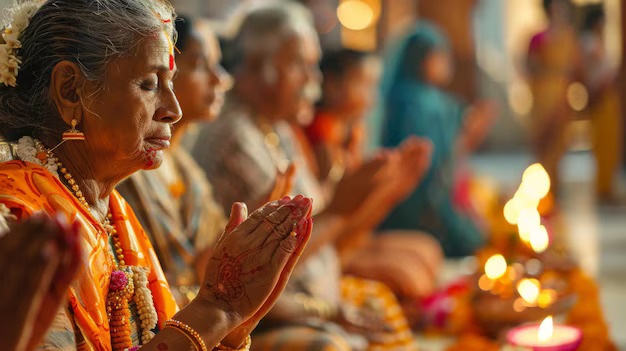
Religion and feminism have long been at odds, with critics highlighting the oppressive nature of religious structures. Yet, the conversation often overlooks the nuanced role of religious women themselves. Are they merely victims of a patriarchal system, or are they strategic players navigating a complex social landscape? What if spirituality isn’t just about faith but also a form of social capital—a tool for survival, power, and influence in a world that often leaves women with few options?
This article dives into the double-edged sword of religious womanhood, exploring how spirituality becomes a currency in patriarchal societies and why feminists must rethink their approach to religion and women’s agency.
The Paradox of Religious Womanhood: Virtue vs. Oppression
In many cultures, religious women are celebrated as the epitome of virtue, morality, and respectability. They are seen as the guardians of tradition, the moral compass of their families, and the enforcers of societal norms. But this revered status comes at a cost.
For women who are financially or socially dependent on their husbands, adhering to religious norms isn’t just a matter of faith—it’s a survival strategy. By conforming to these expectations, they gain social approval, security, and even power within their communities. Yet, this power is conditional. It hinges on their continued compliance with patriarchal standards, trapping them in a system that ultimately oppresses all women.
Spirituality as Social Capital: A Tool for Survival
In patriarchal societies, spirituality often functions as social capital—a resource that can be traded for influence, respect, and security. For women who lack economic independence, this spiritual capital is one of their most valuable assets.
Consider the religious woman who meticulously observes rituals, not out of deep belief, but because it grants her status and authority. She becomes the gatekeeper of spirituality, wielding influence over other women, especially those who deviate from societal norms. Her adherence to religious practices earns her respect, protects her from social scrutiny, and even allows her to exert control within her household.
But this isn’t just about personal gain. It’s about navigating a system that offers few alternatives. For many religious women, spirituality is a lifeline—a way to carve out a space of power in a world that otherwise marginalizes them.
The Feminist Critique: Complicity or Calculated Survival?
Feminist discourse often critiques religious women as complicit in their own oppression, dismissing them as ignorant or brainwashed. But this perspective fails to account for the complexity of their choices. Many religious women are acutely aware of the power dynamics at play. They understand that their adherence to religious norms is a form of social currency, and they use it strategically to secure their position in a patriarchal world.
This doesn’t mean they endorse the system. Rather, they are making calculated decisions within a framework that offers them limited options. To label them as complicit is to ignore the systemic forces that shape their lives.
Holding the System Accountable: A Call for Nuanced Feminism
The real issue isn’t the choices of individual women but the societal structures that force them into such positions. Feminism must shift its focus from critiquing religious women to challenging the systems that make their choices necessary.
- Economic Independence: Financial autonomy is key to breaking the cycle of dependence that forces women to rely on religious conformity for survival.
- Education and Awareness: Empowering women with knowledge and critical thinking skills can help them navigate religious norms without losing their agency.
- Redefining Virtue: Society must stop equating virtue with religiosity, creating space for women to define their own values and identities.
By addressing these systemic issues, we can create a world where women are truly free to choose their paths—whether religious or not.
Conclusion: A New Lens for Feminism and Religion
The relationship between women and religion is far more complex than it appears. Religious women are not just victims or enablers of patriarchy; they are strategic navigators of a system that offers them limited power in exchange for their compliance. Spirituality, for many, is not just a matter of faith but a form of social capital—a tool for survival in a patriarchal world.
Feminism must embrace this complexity, holding the system accountable while recognizing the agency of religious women. Only by understanding the full picture can we hope to dismantle religious patriarchy and create a world where all women are free to thrive.
Additional Resources and Further Reading
-
Internal Links:
-
External Authority Links:
- Pew Research on Women in Religion – A comprehensive resource on the evolving role of women in religious contexts.
- The Role of Social Capital in Empowering Women – Insights into how social capital can transform women’s lives from a global perspective.
- Feminist Perspectives on Religion – An academic exploration of the complex relationship between feminism and religious practices.