




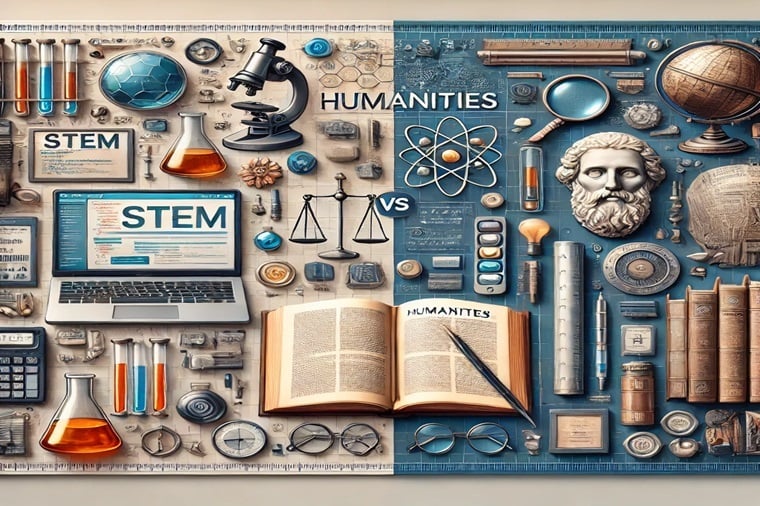
Let’s be real—when was the last time you heard someone brag about their degree in philosophy or literature? Meanwhile, STEM degrees get put on a pedestal like they hold the secrets of the universe. The devaluation of humanities isn’t just a casual trend; it’s a deep-seated societal bias rooted in outdated perceptions of intelligence, gender roles, and economic worth. But here’s the kicker: without the humanities, even the most brilliant scientific breakthroughs would lack meaning, ethics, and, frankly, a soul.
The Devaluation of Humanities: A Gendered Issue
The humanities are often dismissed as “soft” subjects, a term that feels like a backhanded compliment at best and an insult at worst. This perception isn’t random—it’s tied to gender. Historically, women have been more represented in humanities fields, and let’s be honest, anything linked to femininity has a habit of being undervalued (see: caregiving, teaching, and basically anything that isn’t cutthroat capitalism).
Meanwhile, STEM fields are painted as the land of logic and hard facts, where serious intellectuals reside—coincidentally aligning with traditional ideas of masculinity. The result? A subconscious (and sometimes very conscious) bias that deems humanities as less rigorous, less valuable, and less worthy of respect.
Learn more about gender bias in education (DoFollow)
The Misconception of STEM Superiority
The myth that STEM is inherently superior is about as outdated as dial-up internet. Sure, STEM drives innovation and technological progress, but humanities shape the ethical, cultural, and societal frameworks within which those innovations exist. Without ethics (philosophy), storytelling (literature), and historical context (history), we’d be building a future without understanding the past—or the people living in it.
Women have been earning more degrees than men for years now, yet STEM continues to be upheld as the ultimate intellectual achievement. This not only devalues humanities but also makes STEM feel exclusive and intimidating to those who might not fit the traditional mold.
Why STEM and humanities must coexist (NoFollow)
The Value of Humanities: Critical Thinking and Creativity
Here’s a wild thought: What if we stopped acting like education was a competition and recognized the immense value of the humanities? Humanities disciplines cultivate skills that are crucial for society, including:
- Critical Thinking: The ability to analyze and evaluate complex issues from multiple perspectives.
- Creativity: Encouraging innovation, storytelling, and artistic expression (which, fun fact, is necessary even in tech fields!).
- Ethical Reasoning: Helping navigate the murky waters of AI, politics, and scientific advancement.
- Emotional Intelligence: Essential for leadership, teamwork, and social interactions in any career.
In a world where automation and AI are taking over technical jobs, these human-centric skills are going to be even more valuable than coding or crunching numbers.
The importance of humanities in business (DoFollow)
Breaking Down the Bias
If we want to stop the devaluation of humanities, we need to:
- Challenge the stereotype that intelligence is masculine.
- Encourage interdisciplinary education that values both STEM and humanities.
- Show students that following their passions—whether in history or engineering—shouldn’t come with societal judgment.
- Highlight the real-world impact of humanities graduates in various industries, from tech to politics.
Educational institutions, media, and policymakers need to step up and reshape these outdated narratives. It’s time we recognize that a world dominated by STEM without humanities is a world without depth, ethics, or understanding.
How to promote inclusive education (NoFollow)
Conclusion
The devaluation of humanities isn’t just an academic debate; it’s a reflection of deeper societal biases that undervalue creativity, empathy, and historical understanding. The false hierarchy between STEM and humanities has got to go. Instead of pitting them against each other, let’s appreciate how they complement and enrich our world.
Imagine a future where the engineer and the philosopher collaborate to build not just advanced technologies, but ethical, meaningful advancements for all of humanity. Sounds pretty brilliant, right?
Additional Resources:
- Why Liberal Arts Matter in a Tech-Driven World (DoFollow)
- The Role of Philosophy in AI Ethics (NoFollow)
- How Art and Science Fuel Innovation (DoFollow)
By tackling this issue head-on, we can work toward a future where all fields of study are valued equally, leading to a richer, more diverse intellectual landscape.