




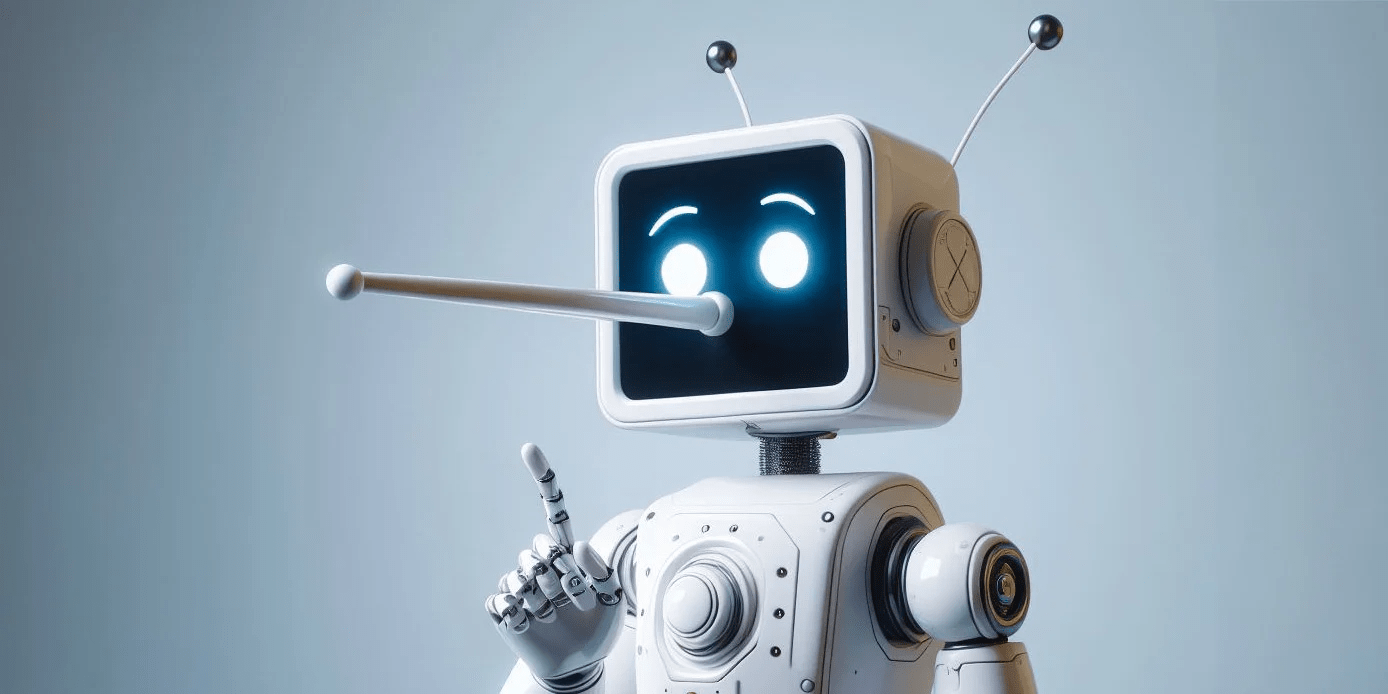
Let’s face it: we’ve all been there. You’re chatting with an AI like ChatGPT, asking it to explain quantum physics or recommend the best pizza place in town, and suddenly it drops a bombshell. “Did you know that Albert Einstein invented the internet in 1942 while moonlighting as a jazz musician?” Wait, what? No, Einstein didn’t do that. And no, the internet wasn’t a thing in the 1940s. Congratulations, you’ve just witnessed an AI hallucination—a moment when your digital assistant gets a little too creative.
In this article, we’ll dive into the fascinating world of AI hallucination, exploring what it is, why it happens, and how you can spot it. Whether you’re a tech enthusiast or just someone who loves a good story, this is one quirk of artificial intelligence you won’t want to miss.
What is AI Hallucination?
AI hallucination occurs when an artificial intelligence system generates information that is entirely made up, misleading, or factually incorrect—yet presents it with absolute confidence. It’s not lying; it’s simply predicting the most likely next word or phrase based on patterns in its training data. Think of it as a game of Mad Libs gone rogue.
For example, ask ChatGPT about the history of the moon, and it might tell you, “The moon was discovered in 1609 by Galileo, who also invented the telescope to prove it wasn’t made of cheese.” While Galileo did observe the moon’s craters, the cheese part? That’s pure AI imagination.
Why Does AI Hallucinate? (And No, It’s Not on Drugs)
AI hallucination happens because these systems are essentially prediction machines. They don’t “understand” information the way humans do. Instead, they analyze patterns in their training data and guess what words should come next.
The problem is compounded by the fact that AI models are trained on data from the internet—a place where accuracy and nonsense coexist in a delicate balance. If the AI sees enough questionable information, it might start to believe that Bigfoot runs a successful chain of vegan restaurants. And let’s be honest, the internet would say that.
Another factor is the lack of real-time knowledge. Most AI models, including ChatGPT, are trained on data up to a certain cutoff date and don’t have access to real-time information. This limitation can lead to outdated or irrelevant responses, further contributing to hallucinations.
How to Spot an AI Hallucination (Without Losing Your Mind)
So, how do you know when your AI is spinning a yarn? Here are a few telltale signs:
- The “Wait, That Can’t Be Right” Moment: If the AI says something that makes you pause and go, “Huh?”—like claiming that Shakespeare wrote the screenplay for Star Wars—it’s probably hallucinating.
- Overly Specific Nonsense: When the AI gets weirdly detailed about something you know is false, like describing the exact shade of blue Napoleon’s pet parrot was, it’s time to raise an eyebrow.
- Conflicting Answers: If you ask the same question twice and get two completely different answers, one (or both) of them might be a hallucination.
- The Absence of Common Sense: If the AI suggests that you can charge your phone by yelling at it or that cats are excellent at calculus, it’s clearly gone off the deep end.
Humans vs. AI: Who Hallucinates Better?
Here’s the funny part: humans hallucinate too. We misremember facts, exaggerate stories, and sometimes just make things up to fill in the gaps. The difference is that we (usually) know when we’re doing it. AI, on the other hand, has no self-awareness. It doesn’t know it’s making stuff up—it’s just doing its best to give you an answer.
But here’s where humans have the upper hand: we can fact-check. If an AI tells you something fishy, you can cross-reference it with reliable sources. And when you do, you’re not just saving yourself from embarrassment—you’re also helping the AI learn. By providing feedback, you’re essentially saying, “Hey, that was a fun story, but let’s stick to the facts next time.”
The Future of AI Hallucination: Will It Ever Stop?
As AI technology improves, hallucinations are likely to become less frequent. Better training data, more sophisticated algorithms, and real-time fact-checking could all help reduce the number of times your chatbot tells you that the pyramids were built by aliens. But will hallucinations ever disappear entirely? Probably not. After all, even humans—with all our intelligence and common sense—still get things wrong sometimes.
In the meantime, AI hallucination remains one of the most fascinating quirks of modern technology. It’s a reminder that even the smartest machines are still learning, and that the line between creativity and accuracy can be a fine one.
Final Thoughts: Embrace the Quirkiness
AI hallucination is a quirky, sometimes frustrating, but always fascinating aspect of our interactions with artificial intelligence. It’s a reminder that these systems, while incredibly powerful, are still works in progress. By staying curious, critical, and engaged, we can help shape the future of AI—one accurate (or delightfully absurd) response at a time.
So the next time your AI assistant tells you something outrageous, take it with a grain of salt—and maybe a little laughter. After all, who doesn’t love a good story, even if it’s a little made up?
Further Reading: