
Miyazaki’s Warning Against AI
Hayao Miyazaki, the visionary behind Studio Ghibli, once recoiled in disgust at the idea of using AI in animation. In 2016, when presented with a rudimentary AI animation tool, his face darkened.
“I strongly feel that this is an insult to life itself,” he declared. “If you want to make creepy stuff, go ahead. But I would never use this in my work.”
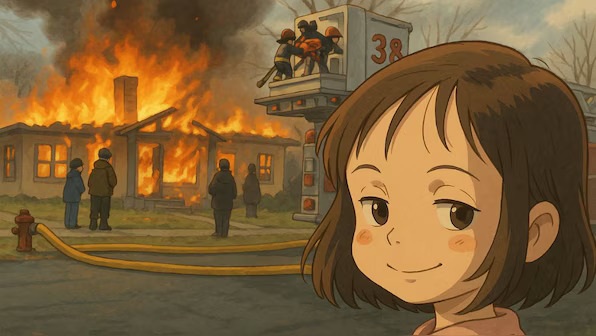
Fast forward to today. OpenAI releases an AI image generator capable of mimicking the “Studio Ghibli style.” Within hours, the internet is flooded with algorithmically generated Ghibli-esque portraits—sleek, soulless, and stripped of meaning. Meanwhile, Miyazaki, now in his 80s, watches as a lifetime of hand-drawn mastery is reduced to a one-line prompt.
Even OpenAI’s CEO, Sam Altman, has urged users to slow down. As the AI-generated Ghibli trend took over social media, overwhelming the platform’s servers, Altman tweeted:
“Can y’all please chill on generating images? This is insane, our team needs sleep.”
This raises a critical question: Can AI truly replicate art? And more importantly—should it?
The Soul of Studio Ghibli: Why AI Can’t Replicate True Art
Studio Ghibli films are not just animations—they are profound meditations on life, loss, and human connection.


Miyazaki’s art is born from human experience—his childhood in post-war Japan, his pacifism, his obsession with flight. AI does not understand these emotions. It does not feel them. It merely stitches together pixels that look like Ghibli while erasing everything that makes Ghibli meaningful.
Theft Disguised as Innovation: How AI Exploits Artists
Tech evangelists claim AI “democratizes” creativity. But this is not democratization—it is plunder.

Miyazaki spent his career arguing that true beauty comes from struggle. AI art spits in the face of that belief, replacing craftsmanship with instant, hollow imitation.
The Fairy Tale Villain: AI as the Soul-Stealer
Fairy tales often warn of villains who steal voices, faces, or souls. AI-generated art is the modern version of this theft.
Miyazaki’s style is not just a technique—it’s an extension of his personhood.
To feed his work into a machine is to erase his humanity from the equation.
The result? Zombie art—images that mimic life but have no heartbeat.
This is not progress. It is desecration.
The Devaluation of Artistic Labor
Art is not just about aesthetics—it’s about the human spirit, effort, and time. AI-generated art undermines the value of that labor.


If we allow AI to dictate the future of art, we risk losing the very essence of what makes it meaningful.
The Future of Art: Human Creativity vs. AI Imitation
We stand at a crossroads:

Miyazaki once said:
“I do not believe machines should ever replace the human hand.”
He was right.
Because art isn’t just about what you see—it’s about who made it, and why.
Final Verdict: Will We Let AI Erase True Art?
AI-generated “Ghibli-style” images are not tributes—they are graverobbers, digging up an artist’s legacy and wearing it as a cheap costume.
If we allow this, we risk a future where everything looks like art, but nothing means anything.
The choice is ours. Do we value human creativity—or surrender it to machines?
Further Reading & References:


